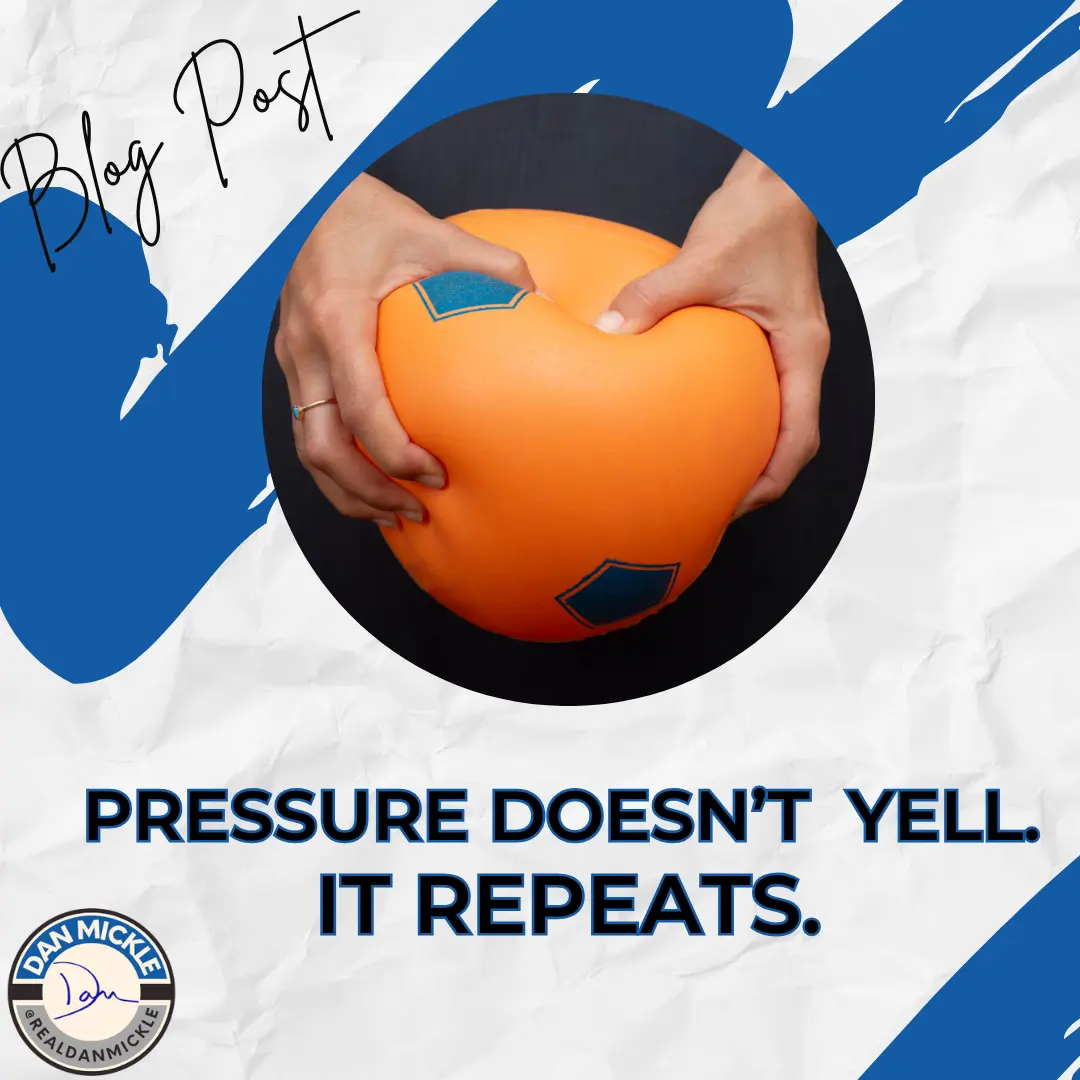
Internal pressure in athletes rarely announces itself. Instead of screaming or demanding attention, pressure builds quietly through repetition, comments, tone, and environment. Over time, external expectations turn into internal narratives that athletes carry every day.
That is how pressure sneaks inside.
Once it settles in, it stops feeling like pressure and starts feeling like identity.
How Internal Pressure in Athletes Actually Starts
Most athletes do not fall apart because of one game, one mistake, or one conversation. Internal pressure in athletes grows through accumulation.
A comment here.
Then a tone shift.
Sometimes a look that lingers a second too long.
Nothing about it feels dramatic. Very little feels intentional. Most of it comes from people who care and want to help. The brain, however, does not store intent. It stores patterns.
Highly aware athletes recognize those patterns quickly. They notice what is said and what gets left unsaid. The difference between curiosity and disappointment registers immediately. Pauses, sighs, and changes in energy land even when no one acknowledges them.
Eventually, patterns turn into stories.
I have to be perfect.
Mistakes feel dangerous.
Slowing down means falling behind.
No one formally teaches these beliefs. Internal pressure in athletes forms through repetition.
How Tone Shapes Internal Pressure in Athletes
Tone teaches faster than instruction ever will.
Athletes learn whether mistakes receive patience or tolerance. They sense whether questions feel welcome or inconvenient. They figure out quickly if effort matters or if results dominate everything.
Tone shows up everywhere. Feedback delivery matters. Coaching attention matters. Even silence carries information. Correction either feels like guidance or judgment depending on how it arrives.
Sensitive athletes do not struggle because they feel too much. They struggle because they feel accurately in environments that rarely pause long enough to notice it.
Adjustment happens early. Adaptation happens quietly. From the outside, it looks like compliance. Inside, anxiety often grows.
Structure, Culture, and Internal Pressure in Athletes
Internal pressure in athletes does not live only in moments. Systems create it.
Daily structure often carries more psychological weight than any single game or tryout. When environments reward outcomes more than effort, athletes learn priorities without a word being spoken. When evaluation replaces reflection, bracing replaces processing.
Over time, culture becomes the voice in the athlete’s head.
Without breathing room, athletes forget how to reset.
When everything feels urgent, everything feels heavy.
Eventually, pressure stops happening to them and starts living inside them.
That is why culture matters as much as instruction.
Why Internal Pressure in Athletes Affects Some More Than Others
Not every athlete absorbs pressure the same way.
Awareness, empathy, past experiences, neurodivergence, and attachment all shape how pressure lands. Some athletes push pressure outward. Others pull it inward. Some react loudly. Others become quiet and compliant.
Silence often gets mistaken for resilience.
Performance often gets mistaken for comfort.
Many athletes look fine while carrying narratives that drain them daily.
They are not failing under pressure. They are carrying internal pressure that never got named, processed, or released.
Interrupting the Repetition
Removing pressure from sport is not realistic or helpful.
Interrupting how internal pressure in athletes builds is.
Naming pressure changes how it feels. When athletes understand that their experience is normal and contextual, pressure loses its grip.
Language matters. Feedback that separates behavior from identity changes how mistakes land.
Structure matters. Built in reflection, recovery, and honest check ins create release before pressure piles up.
Tone matters more than intensity. Calm consistency builds safety faster than volume ever will.
Culture teaches even when no one speaks. That is exactly why it deserves attention.
A Word to Parents and Coaches
Reading this might trigger the thought, “I never meant that.” That is probably true.
Intent matters. Impact teaches.
Most internal pressure in athletes does not come from bad people doing bad things. It comes from good people moving fast inside systems that rarely pause.
Education slows that cycle.
I am hosting two free sessions focused on recognizing pressure early, supporting athletes without overcorrecting, and building environments where awareness becomes a strength rather than a liability.
You can learn more about The Parent Playbook: Supporting Your Athlete’s Mental Game and The Coach Playbook: Supporting Your Athlete’s Mental Game here: https://dmick.click/PW625WEB
The Long View on Internal Pressure in Athletes
Pressure does not break athletes. Unprocessed pressure does.
When comments, tone, structure, and culture align with understanding instead of fear, athletes do not become soft. They become grounded.
Grounded athletes handle pressure better than anyone else.
Not because they feel less.
Because they understand what they feel and where it came from.
That is the difference between pressure that sneaks inside and internal pressure in athletes that gets managed before it ever needs to.
And yeah, it got me thinking.