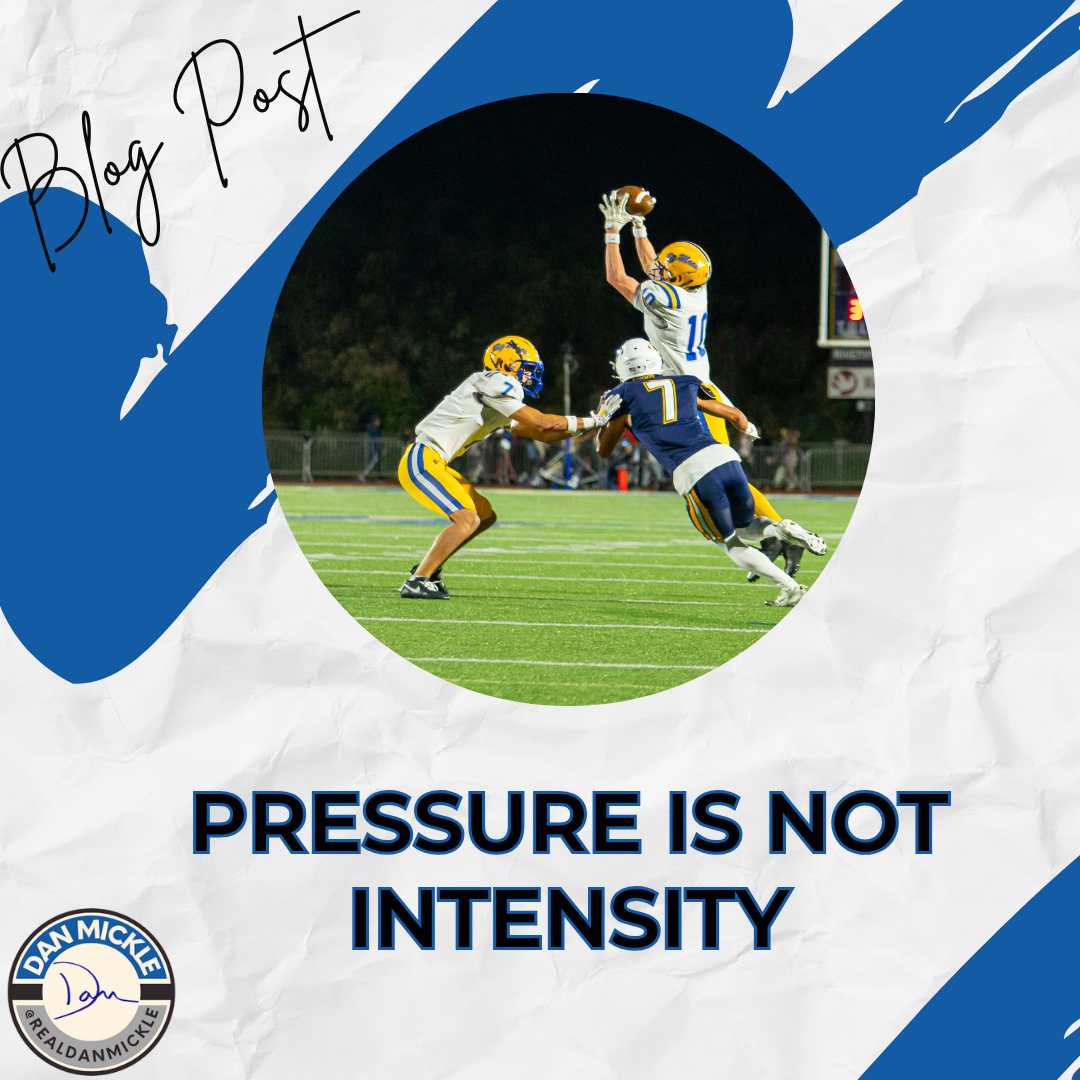
Pressure vs intensity in sports is one of the most misunderstood differences in athletic performance. Many athletes believe that playing harder means playing faster, louder, and with more urgency. In reality, pressure and intensity are not the same thing. Instead, pressure pulls attention toward outcomes and consequences, while intensity sharpens focus through clarity, rhythm, and structure. Because of that difference, understanding this distinction matters for athletes, coaches, and parents who want consistent performance when things get hard.
At first glance, pressure looks productive. There is movement, emotion, and visible effort. However, pressure quietly hijacks attention. As a result, athletes rush decisions, force technique, and abandon rhythm. At the same time, coaches talk more and parents worry more. Although everyone feels busy, performance slowly slips.
Intensity works differently. Rather than feeling frantic, intensity feels organized. It is focused effort with direction. Athletes operating with intensity show steadier breathing, clearer decision making, and more repeatable timing. As a result, they stay fully engaged without being emotionally hijacked by the moment.
Pressure vs intensity in sports: why they feel similar but behave differently
On the surface, pressure often masquerades as intensity because both involve high energy. The difference shows up in where attention goes. Under pressure, attention drifts forward into imagined outcomes. Thoughts like what if I miss or what if this costs us the match start to dominate awareness.
In contrast, intensity anchors attention in execution. The athlete returns to cues, rhythm, and the next controllable action. Because of that shift, intensity supports performance while pressure undermines it.
This difference helps explain why pressure increases errors late in games. As pressure rises, cognitive load increases. Consequently, decision making slows and motor patterns tighten. Research on attentional control consistently shows that performance drops when attention shifts away from task relevant cues and toward threat or consequence.
For a deeper breakdown of how pressure affects attention and decision making, this theme comes up often on The MentalCast, especially in episodes focused on performance under stress:
https://www.mentalcast.com
How pressure disrupts rhythm and timing
One of the first things pressure attacks is rhythm. Pressure speeds athletes up when they should stay steady. At the same time, breathing shortens, vision narrows, and muscle tension increases. Over time, movements become forced instead of fluid and timing disappears.
Intensity, on the other hand, protects rhythm. Rhythm gives the nervous system something familiar to return to when the environment gets chaotic. Whether it is a breath pattern, a routine, or a cadence, rhythm stabilizes execution. Importantly, rhythm does not slow athletes down. Instead, it keeps them consistent.
When rhythm holds, intensity becomes sustainable rather than draining.
Why intensity in sports depends on clarity and structure
Intensity in sports thrives on clarity. When athletes know exactly what they are trying to execute, effort has direction. Without clarity, pressure fills the gap. Vague goals create confusion, while specific cues create intensity.
Structure reinforces that clarity. Clear standards, predictable routines, and defined roles reduce guesswork. Because structure lowers cognitive load, athletes can invest fully without constantly scanning for approval or danger.
This connection between structure and performance is something I have written about before, especially when it comes to routines and consistency in training environments:
https://danmickle.com
When structure is strong, intensity shows up naturally. When structure weakens, pressure rushes in to replace it.
Coaching pressure vs intensity in sports environments
Often, coaches confuse intensity with emotional urgency. As pressure rises, feedback becomes faster, louder, and more reactive. Unfortunately, none of those changes improve execution.
Intensity does not require volume. Instead, it requires alignment.
Coaches build intensity by narrowing focus, reinforcing rhythm, and protecting structure when chaos shows up. Meanwhile, pressure grows when feedback becomes outcome driven rather than process centered.
This distinction matters for coach sustainability as well. Environments built on constant pressure drain athletes and coaches over time. That connection is explored in Episode 008 of The MentalCast on coaching burnout:
https://www.mentalcast.com/e/mentalcast-episode-008-coaching-burnout/
The real takeaway about pressure vs intensity in sports
Ultimately, pressure vs intensity in sports is not about caring less. Rather, it is about caring better.
Pressure drains energy by focusing on outcomes.
Intensity channels energy into execution.
Pressure lives in the future.
Intensity lives in the moment.
Because of this, the athletes who perform best under stress are not trying harder. Instead, they are operating clearer, steadier, and more intentionally.
That shift alone changes how performance feels and how long it lasts.