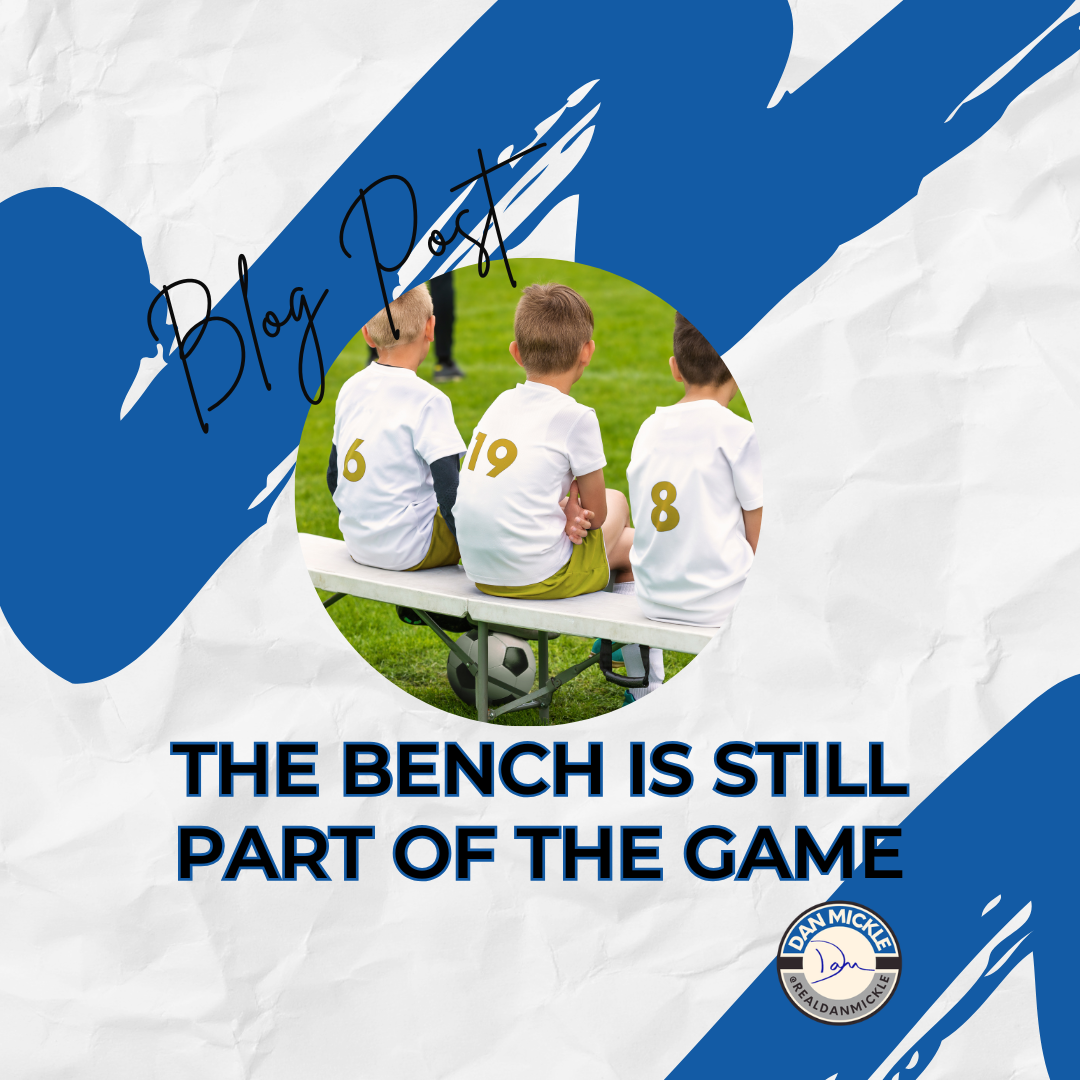
There is a weird thing that happens in sports. We spend hours teaching athletes how to perform, then sometimes act surprised when the athletes who are not performing in that moment have no idea what to do with themselves.
The bench becomes a holding area. Sit here. Be ready. Cheer.
Stay engaged. Do not look upset. Also, somehow learn from everything happening while managing disappointment, noise, uncertainty, social pressure, and the possibility that your number may get called with almost no warning. Easy enough, right?
For some athletes, the bench is harder than the court. That can be especially true for neurodivergent athletes who may struggle with unstructured time, sensory overload, shifting attention, or the ambiguity of not knowing when they will enter.
Yet this is not only a neurodivergent issue. Any athlete who cares about playing can find the bench mentally demanding.
We Coach Playing Time More Than Non-Playing Time
Most coaches have detailed plans for what athletes should do when they are in the game. We know rotations, assignments, substitution patterns, matchups, and responsibilities. Then an athlete comes out and the instruction becomes, “Stay ready.” That phrase is carrying a lot of weight for two words.
What does ready actually look like? Should the athlete track one position? Watch the opponent? Warm up every five minutes?
Talk with teammates? Sit quietly? Ask questions? Rehearse the game plan?
Different coaches mean different things, and athletes are expected to decode the unwritten version. I have written before about balancing individual needs with team identity. The bench is one of the clearest places where that balance gets tested.
The team needs energy and attention. The individual may also need a specific way to regulate, prepare, and stay connected.
Engagement Does Not Have One Look
Coaches are very good at deciding what engaged behavior looks like. Usually it involves sitting forward, talking, cheering, making eye contact, and reacting visibly to the game. Those behaviors may be great. They are not the only signs that an athlete is mentally present.
A quiet athlete may be tracking patterns carefully. An athlete who looks away between points may be reducing stimulation. Someone bouncing a leg or pacing behind the bench may be regulating attention. Another athlete may need to talk constantly to stay connected.
This is where assumptions get dangerous. My post When a Smile Isn’t Defiance was about this exact coaching habit: seeing a behavior and assigning intent before understanding function. The same thing happens on the bench.
“They do not care.” “They checked out.” “They have a bad attitude.” Maybe. Or maybe the athlete is trying to manage disappointment and still stay ready. We should coach what we need, but we should also know why the behavior is happening.
Give Bench Roles Without Turning Athletes Into Staff
One solution is to give non-playing athletes a clear observation job. Not fake busywork. Not “you hold the clipboard because you are not important today.” Give them something that connects directly to the game. A volleyball player might track where the opponent’s setter sends the ball in certain rotations.
A basketball player might watch how a defender handles ball screens. A soccer player might track space behind an outside back. The role should help the athlete understand what they may need if they enter.
This can be especially useful for athletes who struggle with open-ended instructions like “watch the game.” A specific target narrows the field: “Watch their server in Rotation 4. Tell me what you notice about her short serve.” Now the bench has a learning task.
The key is not to overload it. The athlete is still an athlete, not an unpaid graduate assistant. One useful observation is enough.
Uncertainty Can Drain Readiness
There is another challenge coaches often underestimate: not knowing whether you are going in. Some athletes can sit for 40 minutes, hear their name, and instantly perform. Others need a physical and mental ramp. That does not mean they are less competitive.
Their system may simply need more transition time. If you know an athlete is likely to enter, a small warning can help: “Stay loose. You may be in next rotation.” That is not always possible, but when it is, use it.
The CDC’s guidance for students with ADHD recommends extra warnings before transitions and changes in routine. Again, a bench is not a classroom. The practical idea still travels: some people shift tasks more effectively when the shift is not a complete surprise.
You can also build a consistent re-entry routine. Maybe the athlete stands, takes two breaths, checks one cue, and does a short physical warmup. The exact routine matters less than having one.
The Bench Can Amplify Sensory Load
We also need to think about the physical environment. Benches are often loud, crowded, bright, emotionally charged spaces. There may be music, whistles, fans, teammates yelling, coaches talking, and multiple conversations happening at once. For an athlete with sensory sensitivities, that can be exhausting even before they enter the competition.
The National Autistic Society’s sports guidance specifically encourages coaches to consider lighting, noise, smells, and other environmental factors that may create distress. No, you cannot turn off the crowd because one athlete finds the gym loud.
You can still think creatively. Maybe the athlete sits at the edge of the bench rather than the middle. Maybe communication is delivered one-on-one instead of shouted through six people. Maybe they have a clear place to reset during timeouts when they are not entering. Small changes can preserve energy without changing the competitive standard.
Do Not Make the Bench a Morality Test
This may be the bigger issue. Coaches sometimes use bench behavior as a test of character. If you cheer loudly, you are a good teammate. If you look disappointed, you are selfish.
If you ask about playing time, you are not team-first. If you sit quietly, you are disengaged. That is too simple. Athletes are allowed to be disappointed about not playing.
They are allowed to want more. They are allowed to feel frustrated. The standard should be how they handle those feelings, not whether the feelings exist. I would rather tell an athlete, “You can be disappointed and still contribute,” than demand fake enthusiasm.
That gives them a behavioral target without asking them to perform an emotion for the coach. The NCAA’s Mental Health Best Practices emphasizes creating environments that support student-athlete mental health and well-being. At the college level, that should include how we treat athletes when their role changes, their playing time shrinks, or they are navigating transitions in and out of competition.
Coach the Bench Before You Need the Bench
Do not wait until an athlete is frustrated in the middle of a match to explain what good bench engagement means. Teach it early. Define what you need. Give examples.
Ask athletes what helps them stay ready. Create observation roles. Establish re-entry routines. Explain how athletes can communicate when they are struggling.
Most importantly, make it clear that being out of the game does not mean being outside the team. Then watch your own behavior. Do you only speak to the starters? Do your timeouts become five-person meetings while everyone else becomes furniture?
Do you give feedback to substitutes after they come out, or only to the player replacing them? A bench culture is not created by how loudly players cheer. It is created by whether the people sitting there still feel like participants.
This week, sit where your bench sits. Watch one set, quarter, period, or segment from their angle. Notice the noise, the information flow, the sight lines, and the amount of uncertainty. Ask yourself whether you have designed that experience or simply inherited it.
The bench is still part of the game. We should coach it like it matters. Key takeaways: Define what “stay ready” actually means. Give non-playing athletes meaningful observation tasks, recognize that engagement can look different, and provide transition cues when possible.
Let athletes be disappointed without turning emotion into a character judgment. Until next time, remember that a player does not stop being an athlete when they sit down.